


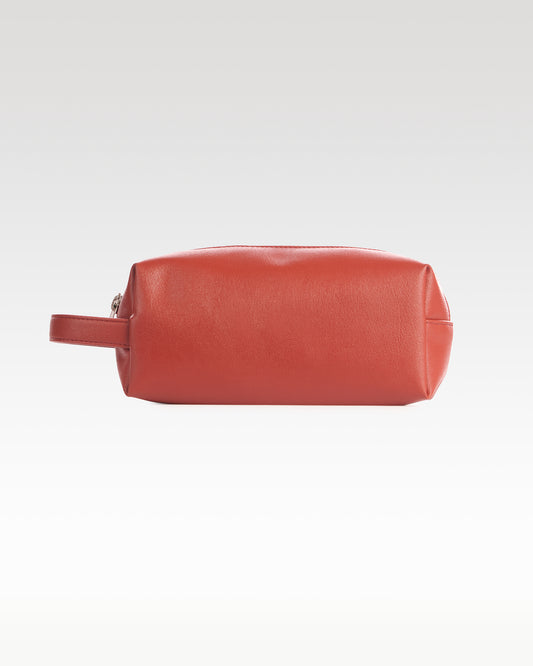



Bags are sold on material and appearance. The material is described, the appearance is photographed, and the buyer makes a decision based on those two things. Neither tells you whether the bag is well made.
A well-made bag is distinguishable from a poorly made one at the point of purchase, if you know what to look for. This is not specialist knowledge. It is a set of specific things to check - things that premium brands tend to get right because they understand the mechanism, and that cheap brands skip because they are not visible in photographs.
This checklist applies regardless of what the bag is made from.
Stitch density and seam quality
Count the stitches. On a visible exterior seam, count how many stitches appear in a two-centimetre stretch of seam. Roughly eight to twelve stitches per centimetre is the range for serious construction. Fewer stitches means each stitch bears more load, and the seam is more susceptible to tearing under stress.
More important than stitch count: the consistency of the stitching. Even spacing, even depth, no puckering at the seam, and no gapping between stitch points - these indicate that the sewing was done at an appropriate tension on appropriate equipment. Uneven stitching is a sign of rushed production or poorly calibrated machines.
At the start and end of every seam, there should be a lock stitch - a short reverse stitch that prevents the thread from unravelling from the end. Look for this specifically at the points where straps are attached and at the corners of bags. If the thread end is simply trimmed and left, the seam will eventually unravel from that point.
Edge finishing
The raw edges of the material panels - the cut edges at seams that are visible on the inside of the bag, or at exposed edges like the top of an interior pocket - tell you a great deal about the manufacturer's approach.
There are four ways an edge can be treated. Raw edges are left untreated - acceptable in some construction contexts, never on a bag claiming quality. Folded edges have the material turned back and stitched, hiding the raw edge - clean and durable. Painted edges have an edge paint applied to seal the raw edge - the standard in quality leather goods and premium alternatives. Piped edges have a separate strip of material bound around the edge - the most durable and most labour-intensive.
Edge paint is the tell. It requires time, precision and multiple coats to apply correctly. On a quality bag, look at the cut edge of the handle, the mouth of an exterior pocket, and the interior pockets. If the edge is cleanly painted with no visible raw fibre or material fraying, the manufacturer paid attention to this step. If the edge is raw or painted over carelessly with runs or blobbing, they did not.
Hardware: the details that actually fail
Hardware is where most bags eventually fail in practice, and it is where cheap bags cut cost in ways that are genuinely consequential.
Zips. Look for YKK on the zip pull or along the zip tape. YKK is the standard zip manufacturer used by serious bag brands at every price point. The zip action should be smooth with no catching, and the zip slider should return cleanly. Pull the zip sharply sideways - it should track without jumping. Unbranded zips are a cost-cut that shows up in years of experience as the pull tab breaking, the slider derailing, or the teeth separating from the tape.
D-rings and loops. These are the attachment points for straps. A cast D-ring should have no visible weld seam at the curve, or if there is one, it should be on the straight side, not the curve where load concentrates. Bend the D-ring slightly between your fingers - good hardware does not flex easily. Cheap cast rings crack at the weld. Welded rings have a seam worth inspecting; make sure it is solid and has not already cracked or bubbled.
Rivets and screws. Post rivets should sit flush against the material with no gap. A gap means the rivet was set without sufficient compression, and it will eventually pull through. On bags with strap hardware screwed rather than riveted, test whether the screw cap is seated fully and whether the assembly rotates under hand pressure. It should not.
Buckles and clasps. Test the spring action in any clasp buckle. A strong, even spring return indicates good hardware. A clasp that springs back weakly or catches on the way through will fail within months of regular use.
Stress point reinforcement
Every bag has locations where load concentrates: the strap attachment points, the base corners, the handle loops, and any horizontal seam that runs across a panel under tension. These are where bags fail in practice.
Bar tacking is the standard reinforcement for stress points. It is a dense, tight cluster of stitching - often visible as a short rectangular block of very close stitches - applied at the exact point where load concentrates, in addition to the primary seam. Check the top of the strap attachment on the back of the bag. Check the corners. Check where the handle joins the body. Bar tacking at these points signals that the designer understood where the forces are.
On bags with a separate backing patch at strap anchors - a small reinforcing square of material stitched to the inside of the bag behind the strap attachment - the load is distributed across the patch rather than concentrated at the two anchor stitches. This is the correct approach for any bag that will carry significant weight.
The inside of the bag
The fabric inside is the manufacturer's honesty test. It is not in the product photographs. It is not described in the listing. It is where the effort goes that nobody sees.
Look at the fabric inside. Is it clean and even, or visibly cheaply cut? Are the pocket seams finished cleanly, or are raw edges left? Is there any fraying already present on new stock? Is the pocket stitching consistent with the exterior stitching, or noticeably looser?
Look at how the material panels join at the base interior corners. Does the fabric inside sit flat, or does it bunch? Bunching indicates poor pattern cutting that will eventually create stress at the fabric-to-frame join.
Look at any fixed organisation - card slots, pen loops, key clips. Are these stitched in clean and tight, or are the edges already pulling? A key clip that wobbles on a new bag will eventually pull out under the weight of keys.
Weight distribution and strap geometry
Hold the bag by the carry handle with a moderate load inside. Does it hang level or tilt? A tilt under load is a pattern balance issue that cannot be corrected after purchase. The bag should hang as the designer intended it to when empty and loaded.
On shoulder bags, check where the strap attachment points are relative to the bag's centre of gravity when loaded. A bag that swings forward when worn is attached too far back relative to where the weight sits. A bag that digs into the shoulder during walking has a strap attachment geometry that puts the load at a poor angle.
Adjustable straps should have a buckle that holds adjustment firmly under load without creeping. Test the adjustment under downward pressure before you are walking with 2 kg inside the bag.
A checklist to use in a shop or at delivery
- Seam stitching: even, consistent, 8-12 stitches per 2 cm, lock stitches at ends
- Edge finishing: painted, folded or piped, no raw visible edges
- Zips: YKK or named brand, smooth action, no catching
- D-rings: no weld crack, no flex under hand pressure
- Rivets: flush, no gap at material
- Bar tacking: visible at strap anchors and base corners
- Inside: clean fabric, finished pocket seams, no pre-existing fraying
- Load balance: hangs level under load from the carry handle
This connects to the broader question of lifespan, which our guide to how long a plant-based leather bag actually lasts covers through the specific variables that determine longevity. And if the material question is where you are starting, our guide to what the labels actually mean is the most useful primer on the vocabulary.
The Transit Briefcase and Classic Requirement Backpack are both worth running through this checklist in hand - they are the products where construction discipline is most visible because the structural demands are highest.
RebagCo. offers 14-day free returns. That window is long enough to run the full checklist, test the hardware under real load, and decide with information rather than speculation.