


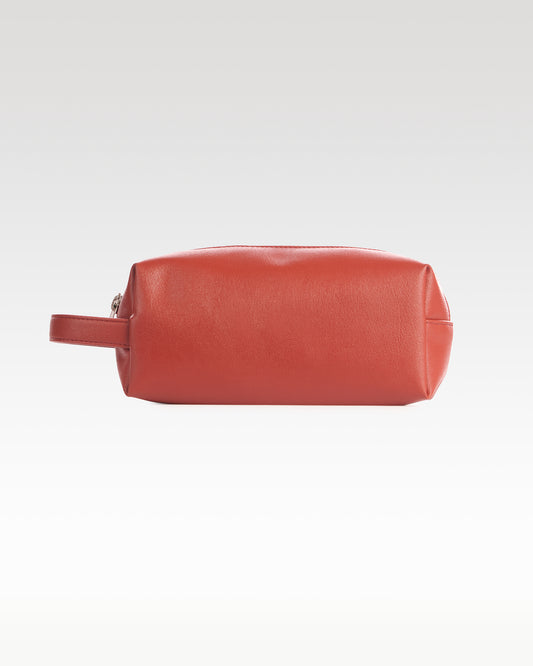
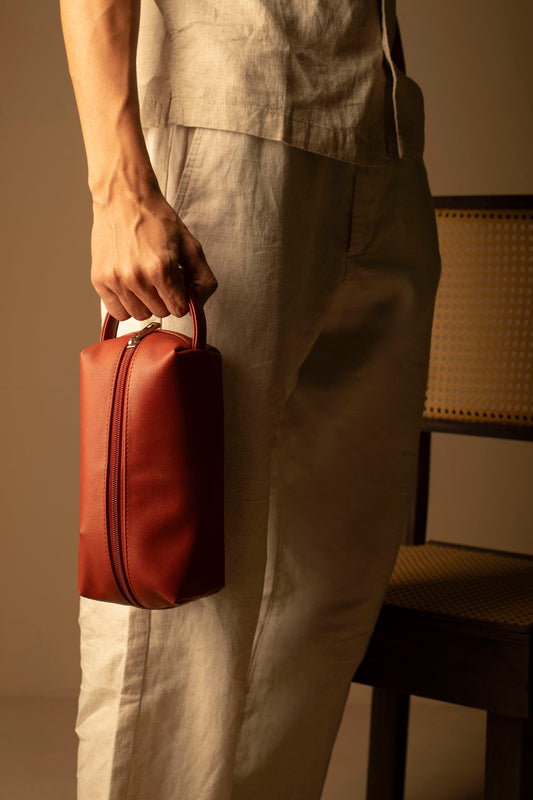


These two words - water resistant and waterproof - are used interchangeably in product listings and they are not the same thing. The distinction matters for managing expectations accurately, which is more useful than a reassuring but vague answer.
Water resistant means the material repels water at the surface. Water does not immediately absorb. A short exposure, light rain, or a splashed surface can be wiped away without damage. Waterproof means water cannot penetrate at all, under sustained exposure, including at pressure. Waterproof is what a dive watch needs. Water resistant is what a well-made bag needs.
Plant-based leather is water resistant. It is not waterproof, and no bag in this price and design category is waterproof. Knowing which of those you are dealing with helps you use the bag correctly.
Where the surface actually fails
The surface material is almost never where water gets into a bag. This is the part most people do not think about.
When a bag gets wet in real conditions - a downpour, a bottle that leaks inside, a monsoon commute - the failure points are not the flat panels of material. They are the stitch holes, where a needle has passed through the material and left a channel. They are the zip teeth, where two plastic or metal rows meet imperfectly under pressure. They are the seam lines at corners, where two panels are joined and the junction is structurally different from the flat surface around it.
A bag with perfectly water-resistant material and poor seam sealing, unprotected zip pulls or exposed stitch lines will let water through those points first. The material surface is doing its job while the construction fails around it.
High-end outdoor and technical bags address this with taped seams - a waterproof tape bonded over the interior side of every seam - and waterproof zips. These constructions add cost and weight. They are designed for sustained exposure in extreme conditions. For everyday use in Indian cities, they are not the standard, and the absence of them does not mean a bag will fail in normal rain.
How animal leather behaves in rain, for comparison
Animal leather and water have a complicated relationship that plant-based materials simply do not have.
Animal leather absorbs water. A wet leather bag goes stiff as it dries. The fibres tighten, the material contracts, and you often get a patchwork of darker and lighter areas where it dried unevenly. Good quality leather recovers with conditioning - a layer of wax or oil worked in to re-soften the fibres. Poor quality leather does not recover well. Either way, you have a drying process to manage, then a conditioning step, then a period of waiting.
Plant-based leather does not absorb water into its fibre structure in the same way. It does not water-stain. It does not go stiff after soaking and then need conditioning to recover. It does not develop the tight patchiness that leather gets when it dries without treatment. Wipe the surface, let it dry, done.
This is a genuine practical advantage in monsoon conditions. You do not need to rush home and immediately treat the bag. You do not need a specific product ready to condition the material after it gets wet.
What to do if the bag gets soaked
Shake off standing water from the outside. Open the bag and empty it. If there is any moisture inside from ingress at a zip or seam, use a dry cloth to remove it, then leave the bag open to dry fully in a ventilated space.
Do not leave the bag closed and packed while damp. Air needs to circulate inside for the fabric inside the bag to dry completely. A bag left packed and damp for a day or two may develop a smell. That is a fabric-drying problem, not a material problem, and it is easily avoided by letting the bag breathe.
Do not dry with a heat source applied directly. A hair dryer on high heat held close to the material for extended time is not good for any coated material. Air drying is sufficient and safer.
Prolonged humidity versus a single downpour
A single soaking is not the hard test for this material. Prolonged, sustained humidity over weeks and months is the harder condition to manage, and it is the condition that most of India faces for significant parts of the year.
Humidity does not damage the surface of the material in the way that a soaking would. The concern with prolonged humidity is what it does to the material over time at the polymer level - the hydrolysis process that degrades polymer coatings gradually. A well-formulated material handles Indian humidity well. A cheaply formulated one may degrade faster in high-humidity storage.
The practical implication: do not store your bag in a closed, unventilated space in monsoon conditions. A dry, airy shelf is better than a sealed wardrobe. This is less about the material surface and more about managing the internal environment of whatever space the bag lives in.
If you are buying a bag that will see monsoon commutes regularly, look specifically at how the zips are finished and how the seams at the base of the bag are constructed. The base seams take the most water exposure when a bag rests on a wet surface.
For practical monsoon use and storage in Indian conditions, our care guide for plant-based leather bags in Indian weather covers the seasonal specifics in full. For understanding the full picture of what this material is and how it compares to others, our guide to what the labels actually mean is the best starting point.
The Transit Briefcase and the Classic Requirement Backpack are both designed for daily commute use and are the most practically relevant products if your primary concern is getting caught in rain.
RebagCo. offers 14-day free returns on all orders. If you want to test the material's water behaviour before committing, that is what the return window is for.