




Press most brands on what their material contains and you get a marketing description: "crafted from natural fibres," "plant-derived alternative leather," "next-generation material." These are not false, exactly. They are incomplete to the point of being useless if you want to understand what you are actually buying.
A more useful description reads like a cross-section. Plant-based leather is a layered material, and each layer does a different job. Understanding the structure helps you evaluate the material itself and the claims any brand makes about it.
The layer structure
Most plant-based leather materials are built in four functional layers. Different manufacturers use different proportions and different specific materials, but the structural logic is consistent.
The fibre base. The innermost layer. This is the structural backbone: it provides tensile strength, body, and the anchor for everything above it. In plant-based leather, this layer contains plant fibre from agricultural waste or purpose-grown biomass. The fibre is processed, often combined with natural binders, and formed into a dense mat. The weight and density of this layer is one of the most important performance variables in the material, and it is almost never described in product listings.
The adhesive or bonding layer. A thin layer that bonds the fibre base to the material above it. This is not always described separately by manufacturers, but it is structurally significant. A weak bond here is where delamination originates. Better constructions use adhesives suited to both the fibre base below and the polymer layer above, with testing across temperature and humidity ranges.
The body layer. Usually a bio-polyurethane layer that gives the material most of its surface properties: how it feels, how it handles flexing, how it responds to temperature change. This is where the bulk of the polymer content sits. In bio-PU materials, the polyol component is derived partly from plant-based sources - plant oils, sugars or bio-waste - rather than solely from petroleum. The isocyanate component, the other half of the polyurethane chemistry, is typically still petroleum-derived.
The top coat. The outermost layer. This provides colour, surface texture, water resistance and abrasion resistance. It is the thinnest layer and the most visible one. The finish - matte, semi-gloss, pebbled - comes from here. Better top coats are formulated for UV resistance and scratch resistance. Cheaper ones are not.
Why the fibre base matters more than the surface
This is the insight that most product descriptions obscure. The surface is what you see and feel in a shop. The fibre base is what holds everything together over time.
A dense, heavy fibre base gives the polymer layers above it a large and stable surface to bond to. It distributes flex stress across a wide contact area rather than concentrating it at the few contact points of an open-weave scrim. It makes the material feel more substantial under pressure. And because the base provides structural integrity from within, the surface coatings do not need to compensate for a weak structure underneath.
Banofi Leather, an Indian plant-based material company based near Kolkata, publicly states that its material is roughly 50% banana stem waste, 30% natural additives and 20% polymers, mostly recycled. That level of disclosure is instructive because it shows what honest compositional disclosure looks like: specific percentages by weight, with the polymer content named openly. It also shows that polymer content in a plant-based material is not a flaw to hide - it is the mechanism that makes the material functional.
Banofi's own website states they "continue to innovate and reduce our dependence on polymers." That framing is useful. Reducing polymer content is an ongoing engineering challenge, not a problem that has been solved. Any brand suggesting it has solved it entirely is not being straight with you.
Bio-based content versus composition by weight
This is the most important distinction in this entire subject area, and almost no brand explains it clearly.
Bio-based carbon content is measured by ASTM D6866, a standard test method that determines what percentage of the carbon in a material comes from biological sources rather than fossil sources. When a brand says its material is "X% bio-based," this is almost always what the percentage refers to - not the percentage of plant material by weight.
Here is where it matters. A material can have a high bio-based carbon content percentage and still contain significant polymer by weight. The carbon atoms in the bio-derived polyol component of a bio-PU are counted as bio-based. The polymer chains those carbon atoms form are still polyurethane. The ASTM D6866 test measures the source of the carbon atoms, not whether the material is polymeric.
This means "80% bio-based" and "contains 20% polymer by weight" can both be simultaneously true about the same material. They are measuring different things. One tells you about the source of the carbon. The other tells you about the composition by mass. Banofi's 50/30/20 figure is composition by weight - a more structurally informative measurement than a bio-based carbon percentage, and a different one.
Neither number is misleading in isolation. What is misleading is presenting a bio-based carbon percentage as if it means the material contains almost no polymer. It does not mean that.
How to ask a brand the right question
The question "what is your material made of" usually produces a marketing answer. More specific questions produce more honest ones.
Ask: what is the base layer material, and what is its weight or density? A manufacturer that knows its material will answer this. One relying on marketing language will deflect or describe the surface instead.
Ask: does the material contain polyurethane, and if so, is it conventional PU or bio-PU? This should have a direct answer. If the brand cannot or will not answer, that tells you something.
Ask: has the material been tested for hydrolysis resistance and flex fatigue? These are standard tests for coated materials. A serious material supplier will have these results. The numbers do not need to be public, but a brand should be able to confirm the testing was done.
Ask: what is the bio-based content percentage, and was it measured by ASTM D6866? If the answer names the standard, that is a meaningful claim. If the answer is "made mostly from plants," it is not.
Understanding certifications - what PETA-approved vegan status, GRS and ASTM D6866 actually verify - is covered in our guide to what these certifications actually mean. The broader vocabulary of what vegan leather, PU leather and plant-based leather labels communicate is the subject of our guide to what the labels mean, which is the most useful single read in this cluster.
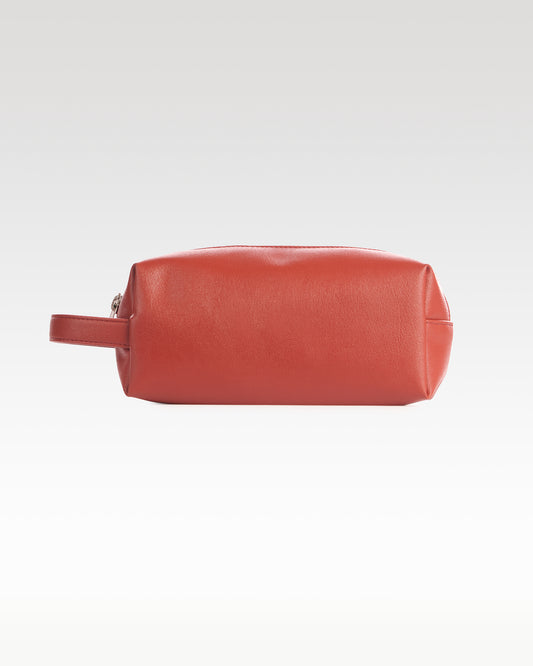
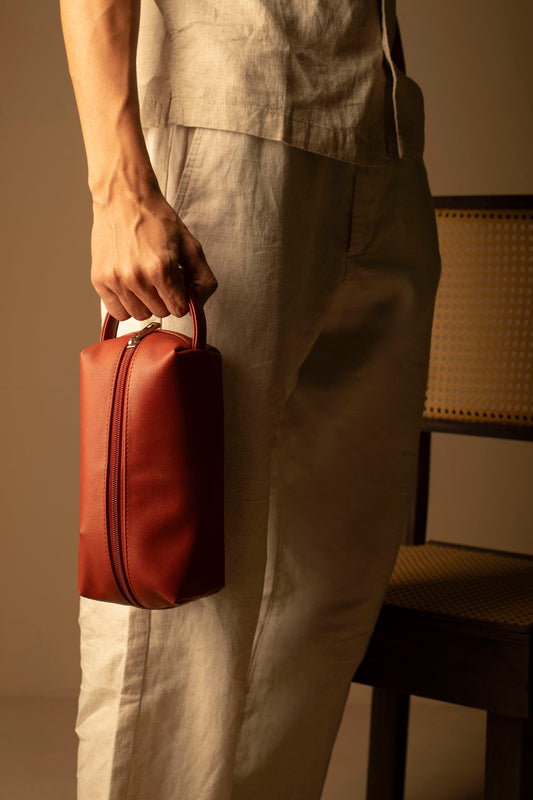
The Vault Eyewear Case and the Utility Case give you a useful sense of how the material handles structured shapes and rigid internal forms - a different mechanical test from a soft wallet and worth assessing if you are comparing stiffness and recovery.
RebagCo. products come with 14-day free returns. If the material composition question matters to your decision, assess it in person.