


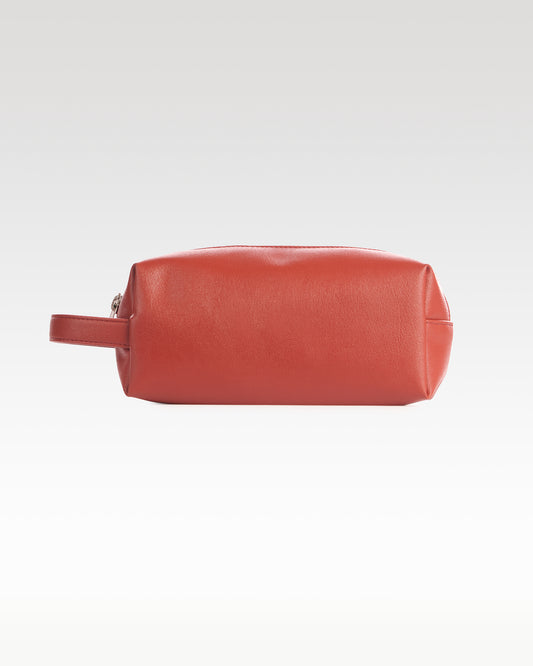
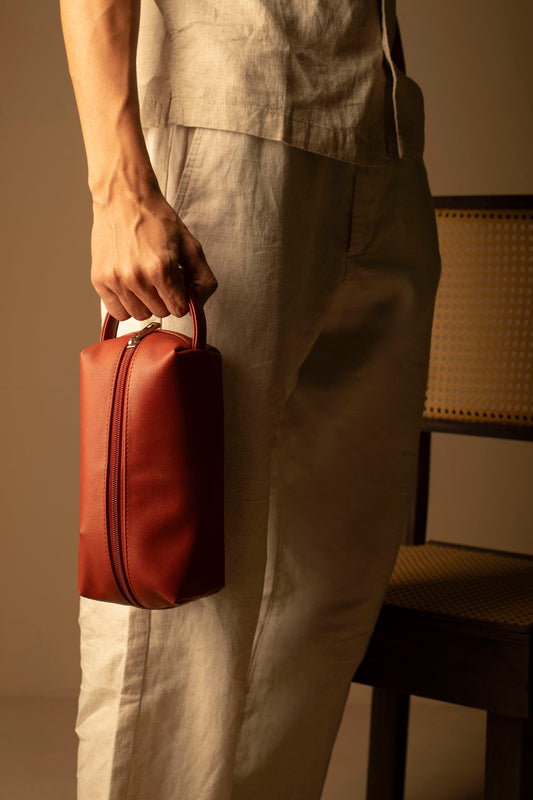


The question arrives in some version of this: "I bought a vegan leather wallet a couple of years back. It started peeling within the year. Is that just what this material does?" It is the most common pre-purchase objection to plant-based leather, and it is based on a real experience with a real product that failed.
The honest answer is that the experience was real, the cause was real, and the assumption that it applies to the whole category is not.
Peeling is what happens to a badly made coated material. Understanding the difference requires knowing how coated materials fail - which takes about five minutes and is worth your time before buying anything in this category.
What peeling actually is
The technical name is delamination. It is not surface wear - the top layer grinding down from friction or sunlight. It is a bond failure: two layers that should stay together coming apart from the inside. This distinction matters because it shifts attention from the surface material to the construction underneath.
Every coated material works on the same structural logic. A backing layer provides body, tensile strength and shape. One or more surface coatings provide feel, colour and water resistance. Those layers are functionally different materials and have to stay bonded across years of temperature change, humidity cycling and repeated mechanical stress. When the bond fails, the coating separates and comes away in sheets or chips.
The question is not whether a material "peels" in some abstract sense. The question is what causes the bond to fail, and whether the construction was designed to prevent it.
The three causes
Thin coating over a weak backing. The cheapest construction in this category uses an open-knit polyester scrim - structurally close to stiff gauze - as the backing, with a thin polyurethane film laminated on top. There is almost no substance in the backing. The coating is minimal. When the bond between them weakens, the coating comes away in large sheets because there is nothing underneath to hold it.
This construction is how the cheapest airport wallets and fast-fashion belts are made. It is also the direct cause of the reputation that vegan leather peels. The failure mode is specific to a particular, very inexpensive way of building something - not to the material class as a whole. But because the cheap version is what most people have encountered, the whole category absorbs the blame.
Hydrolysis. This matters particularly in India. Hydrolysis is the process by which water molecules break down polymer chains at the chemical level over time. The coating does not wear away from the outside - it degrades internally, becoming brittle, then micro-cracking, then flaking. Heat significantly accelerates the rate. Sustained humidity keeps the reaction going between uses.
A bag left in a hot car repeatedly through summer, or stored in a warm and damp wardrobe for months, is undergoing hydrolysis even when untouched. Good material formulations resist hydrolysis substantially better than cheap ones. Hydrolysis resistance is one of the standard tests serious material suppliers run. Cheap suppliers do not formulate for it.
Flex fatigue. Every fold concentrates stress at a point. Repeated folding at the same location fatigues the bond there. The predictable failure locations on bags are strap anchors, where material bends under load every time the bag is lifted; corners, which flex each time the bag is set down; and fold lines on wallets, which are bent and released many times daily over years. These are where coated materials fail first if the construction has not been designed to handle them.
A well-designed bag distributes flex stress across a large area. Poorly reinforced stress points are where bags fall apart, regardless of how good the surface looks.
Why the base layer matters more than the surface
The surface of a material is visible and tactile in a shop. The base layer is invisible. But the base layer determines whether the whole thing holds together over time.
A dense, heavy fibre base - more material per unit area, less air in the structure - gives the surface coatings a large and stable surface to bond to. It absorbs flexing more evenly, distributes stress across a greater contact area, and resists delamination more effectively as the bond ages. Materials built this way outlast cheaper alternatives because there is simply more structure holding everything together.
An open-knit scrim does the opposite. The coating contacts the backing only at the crossing points of the weave. Stress concentrates at those points. The bond is only as strong as its weakest contact area.
Two products described identically as plant-based leather can have entirely different base structures. The surface description tells you nothing about this. A manufacturer that knows its construction will describe the base layer when asked. One that does not know - or does not want you to ask - will describe only the surface.
What to check before you buy
Hold the material and make a firm fold at a corner. A solid construction feels consistent through the fold. A poor construction feels slightly hollow, or the surface shifts against the backing. Even a small amount of surface movement is an early sign of a construction that will eventually delaminate.
Look at the strap anchors on bags. Where the material wraps around the anchor point, check whether there is a reinforcing patch on the inside. If the material simply folds back and gets stitched with no backing support, all the flex stress goes through that one stitch. That stitch fails first, and the failure looks like a material problem even though it is a construction problem.
At corners, look for bar tacking - a dense cluster of tight stitching that reinforces the stress point beyond the basic seam. A sewn corner with no additional reinforcement will fail at the corner first.
On wallets, the fold line is the primary stress point. Look at whether the material sits flat at the fold or already shows a crease from display. Thinner wallet materials handle repeated folding better than very thick ones. Ask about the internal structure at the card section - does it sit evenly, or does it already pull at the seams?
Ask the brand directly about the base layer. If the answer is a description of the surface - soft, leather-like, supple - the brand is not answering the question. If the answer includes fibre type and base weight, the brand knows what it is making.
The honest limit
Full-grain leather from a serious tannery, maintained consistently, can outlast plant-based leather over the very long term. A well-maintained hide develops structural integrity across decades in a way coated materials at their current stage do not replicate. That is a real and honest difference.
What a well-built plant-based leather product should not do is peel or crack from ordinary use within a normal ownership period. Modern hydrolysis-resistant formulations handle sustained humidity significantly better than earlier generations. And the most common cause of bag failure is not material delamination - it is hardware corrosion, zip failure and stitch thread deterioration. Those failures affect leather bags equally.
If the durability question matters before you commit, our guide to how long a plant-based leather bag actually lasts covers the construction variables that determine lifespan. And how to tell if a bag is well made gives you a specific checklist for inspecting any bag at purchase.
The Classic Fold Wallet uses a flat-stitch construction at the fold line rather than a doubled seam - the right approach for managing flex stress at the point that matters most in a wallet. The Classic Requirement Backpack uses bar-tacked reinforcement at every load-bearing stress point.
RebagCo. offers 14-day free returns on all orders. If you want to assess the material and construction in person before deciding, that window is there for exactly that purpose.