


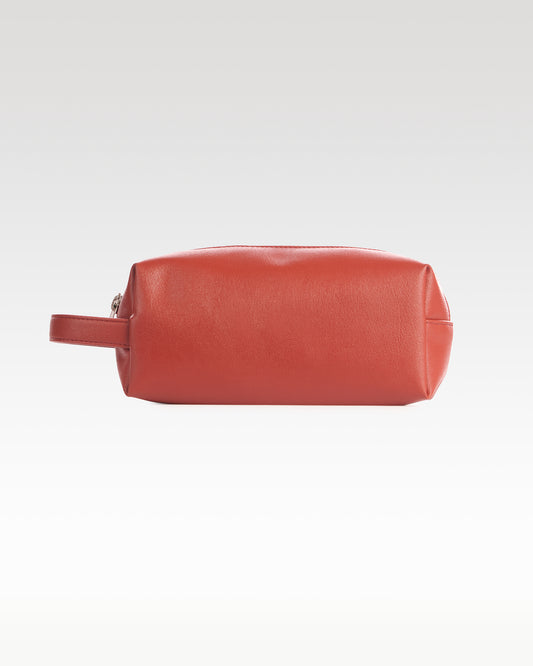



Plant-based leather is a more sustainable leather alternative than either animal leather or plastic (PU) leather on every major environmental measure: carbon, water, toxic chemicals, microplastics and biodegradability. Here is what those differences look like in concrete terms.
Is plant leather actually sustainable?
Compared to animal leather, RebagCo's plant-derived leather uses 93% less carbon and 97% less water in its production. It contains no toxic chemicals and no petroleum-derived materials. At 98% bio-based content, nearly all of the material comes from renewable plant sources rather than crude oil or animal agriculture.
No material has zero footprint. But plant leather sits in a different category to both conventional leather and plastic alternatives. Here is how they compare directly.
Plant-based leather vs animal leather vs PU leather
| Measure | Animal leather | PU leather | Plant leather (RebagCo) |
|---|---|---|---|
| Carbon footprint | High | Medium-high | 93% less than animal leather |
| Water use in production | Very high | Lower | 97% less than animal leather |
| Toxic chemicals | Yes (chromium tanning) | Some in production | None |
| Microplastics | No | Yes, sheds over time | No |
| Biodegradable | Partially | No | Yes |
| Bio-based content | N/A | 0% | 98% |
| Petroleum-derived | No | Yes | No |
| Cruelty-free | No | Yes | Yes |
What does 98% bio-based mean?
Bio-based content refers to the proportion of a material that comes from renewable biological sources rather than fossil fuels. A 98% bio-based rating means that almost all of the material, measured by weight, originates from plant matter. The remaining fraction is typically a small amount of structural binder used in processing.
For comparison, PU leather is 0% bio-based. It is made entirely from petrochemicals. The bio-based figure is one of the clearest ways to distinguish a genuine plant-derived material from a petroleum plastic product that may still carry the vegan label. For more on that distinction, read Plant Leather vs Vegan Leather: Why They're Not the Same.
What is the environmental impact of animal leather?
Animal leather carries two distinct environmental costs. The first is cattle farming: raising livestock for hide and meat is one of the most water and carbon-intensive activities in food and materials production. The second is the tanning process, which conventionally uses chromium salts and other toxic chemicals to convert raw hide into usable leather. These chemicals require careful treatment in industrial quantities and are associated with significant pollution where regulation is weak.
Chromium-tanned leather also degrades incompletely. It is often described as partially biodegradable, but the breakdown releases the bound chemicals rather than cleanly returning the material to the soil.
What is the environmental impact of PU leather?
PU leather avoids animal agriculture but introduces a different set of concerns. It is made from polyurethane, a petroleum-derived plastic. It is not biodegradable. As it wears, the plastic surface coating breaks down and sheds microplastic particles. Microplastics persist in soil and water systems for centuries and accumulate in ecosystems.
The word eco-friendly applied to PU leather is a stretch. It avoids animal harm, which matters, but the material is a plastic product from start to finish. For buyers who are choosing based on environmental footprint rather than animal welfare alone, PU leather does not significantly outperform animal leather on the measures that affect the planet long-term.
Is plant leather biodegradable?
Yes. RebagCo's plant-derived leather is biodegradable, meaning it breaks down naturally without leaving persistent synthetic residue. This is a meaningful distinction from PU leather, which does not biodegrade, and from chromium-tanned animal leather, which degrades incompletely.
Biodegradability does not mean fragile. A biodegradable material can be durable during use and still break down at end of life. The two are not in conflict.
The full picture
The three main leather categories, animal, plastic and plant, are not equally weighted on environmental footprint. Animal leather carries high carbon and water costs and toxic processing. PU leather starts with crude oil, sheds microplastics and does not biodegrade. Plant leather produces 93% less carbon and 97% less water compared to animal leather, uses no toxic chemicals, and is biodegradable from a 98% bio-based starting point.
For a broader overview of how plant leather compares as an everyday material, read Plant Leather vs Regular Leather: What's the Difference?. To explore RebagCo bags, wallets and accessories made from plant-derived leather, visit rebagco.com.
Frequently asked questions
Is plant leather actually sustainable?
Yes, relative to its alternatives. RebagCo's plant-derived leather uses 93% less carbon and 97% less water than conventional animal leather, involves no toxic chemicals, contains no microplastics, and is biodegradable. At 98% bio-based content, it starts from plant sources rather than petroleum or livestock.
What is the most eco-friendly leather?
Among the common alternatives available in India today, plant-based leather is the most eco-friendly option on the measures of carbon, water, toxic chemicals, microplastics and biodegradability. Animal leather and PU plastic leather both carry higher environmental costs across these categories.
Is plant leather biodegradable?
Yes. Plant-derived leather is biodegradable, unlike PU plastic leather, which does not break down and sheds microplastics over time. Biodegradability does not affect durability during use; the material holds up well with daily carry.
Does PU vegan leather contain microplastics?
Yes. As PU leather wears and degrades, the plastic surface coating breaks down into microplastic particles. These persist in soil and water for long periods. Plant leather does not contain or shed microplastics.
What does bio-based content mean on a leather product?
Bio-based content measures how much of the material comes from renewable plant sources rather than fossil fuels, expressed as a percentage by weight. A 98% bio-based rating means nearly all of the material is plant-derived. PU leather is 0% bio-based: it is entirely petroleum-derived.